

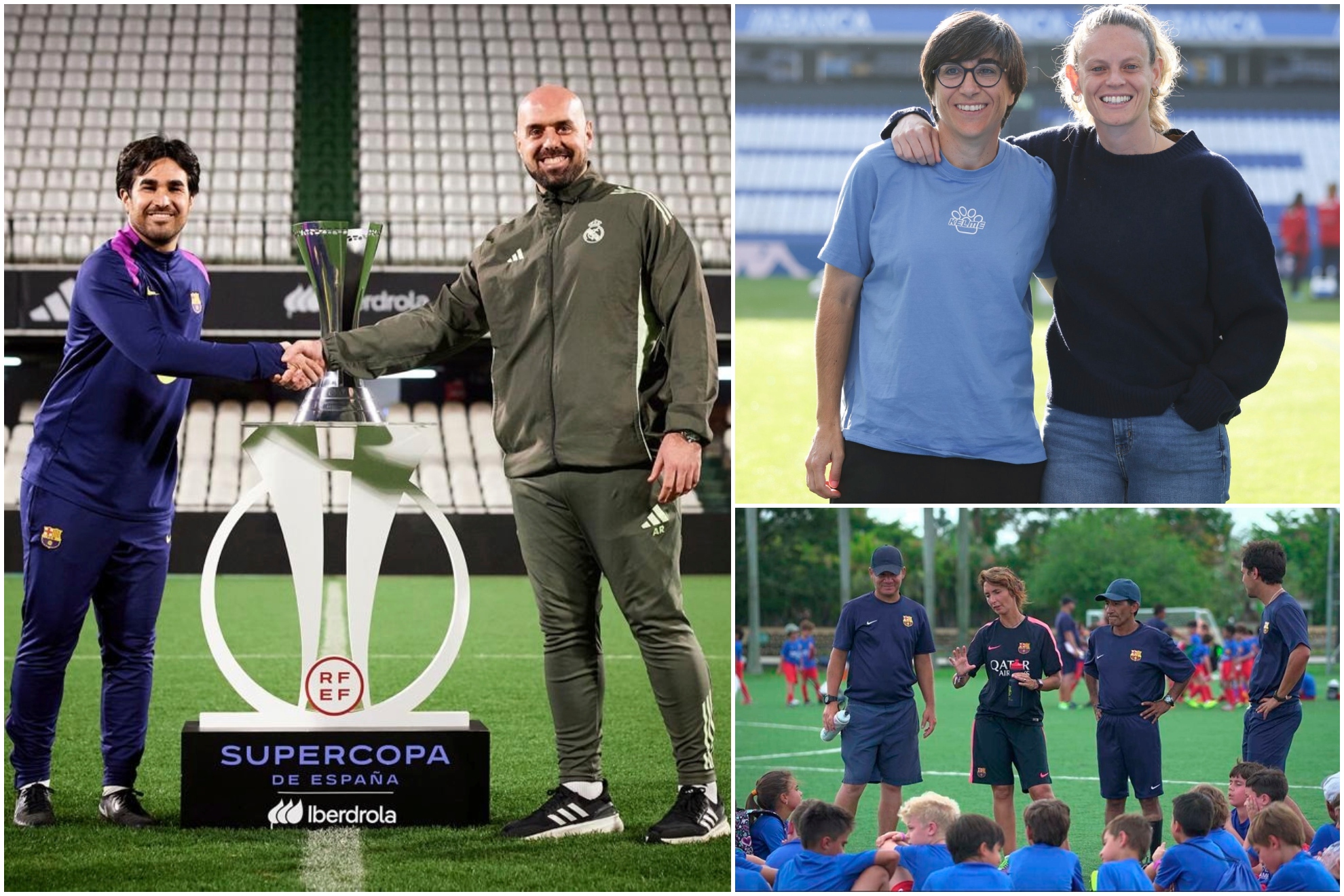
Glass ceiling in the dugout: Why aren't women coaching top Spanish women's teams?
While England's WSL approaches gender parity with 5 female head coaches, Spain's Liga F has just 2 women in charge - and none at the big three clubs.
The revolving door of male managers continues at Spain’s top women’s clubs while female coaches remain a rarity at the highest level.
The boys’ club of Spanish women’s football
Atlético Madrid have just appointed José Herrera as their women’s team coach - the ninth bloke in a row to take the reins. You’d need to go all the way back to 2008 to find María Vargas, the last woman in charge of the Rojiblancos.
It’s a similar story across the big three:
- Barcelona: Pere Romeu currently in charge, with just one female coach (Natalia Astrain, 2002-2006) in their history
- Real Madrid: Only male coaches since launching their women’s team
- Atlético Madrid: Nine consecutive male appointments since 2008
The numbers across Liga F paint a grim picture. Only 2 of 16 clubs currently have female head coaches - a measly 12.5%. And that’s actually worse than the start of the season when four women were in charge, before Granada and Levante sacked their female coaches mid-season.
”We emerge in dribs and drabs”
Natalia Astrain, who coached Barcelona women from 2002-2006 and now works as an analyst in Miami, remembers breaking barriers nearly two decades ago.
“Although there’s been a qualitative leap forward, it’s still difficult to break barriers,” Astrain tells MARCA. “Women’s football has evolved with many improvements for players, but in the case of the dugouts it’s more complicated. We try to help each other, because we emerge in dribs and drabs.”
The Spanish Football Federation reports just 3,682 women hold coaching licenses out of 78,207 total - a paltry 4.7%.
Meritocracy or old boys’ network?
The common argument against gender equality initiatives is that “merit should decide” - but this begs the question of what exactly qualifies many male coaches who hop from men’s football into women’s teams when they can’t find success elsewhere.
The reverse pathway is virtually non-existent - female coaches rarely get opportunities with men’s teams at any level.
“The Federation is helping more women get qualifications, but it’s not just about courses - to make the leap, they need opportunities. That’s where many female coaches get lost,” explains Astrain.
England shows a different way
While Spain struggles, England’s Women’s Super League boasts near gender parity with 5 female coaches across 12 clubs (42%). These include high-profile appointments like Sonia Bompastor at Chelsea and Renée Slegers at Arsenal.
FIFA has created scholarship programs aimed at increasing qualified female coaches in professional football, but Spain’s top clubs seem reluctant to follow suit.
“Our door is open to coaching, but only for serious projects,” concludes Astrain. “A prepared woman can definitely coach any team. But someone has to open the door for her to do so.”