

Barça back at the big boys' table as finances finally come good
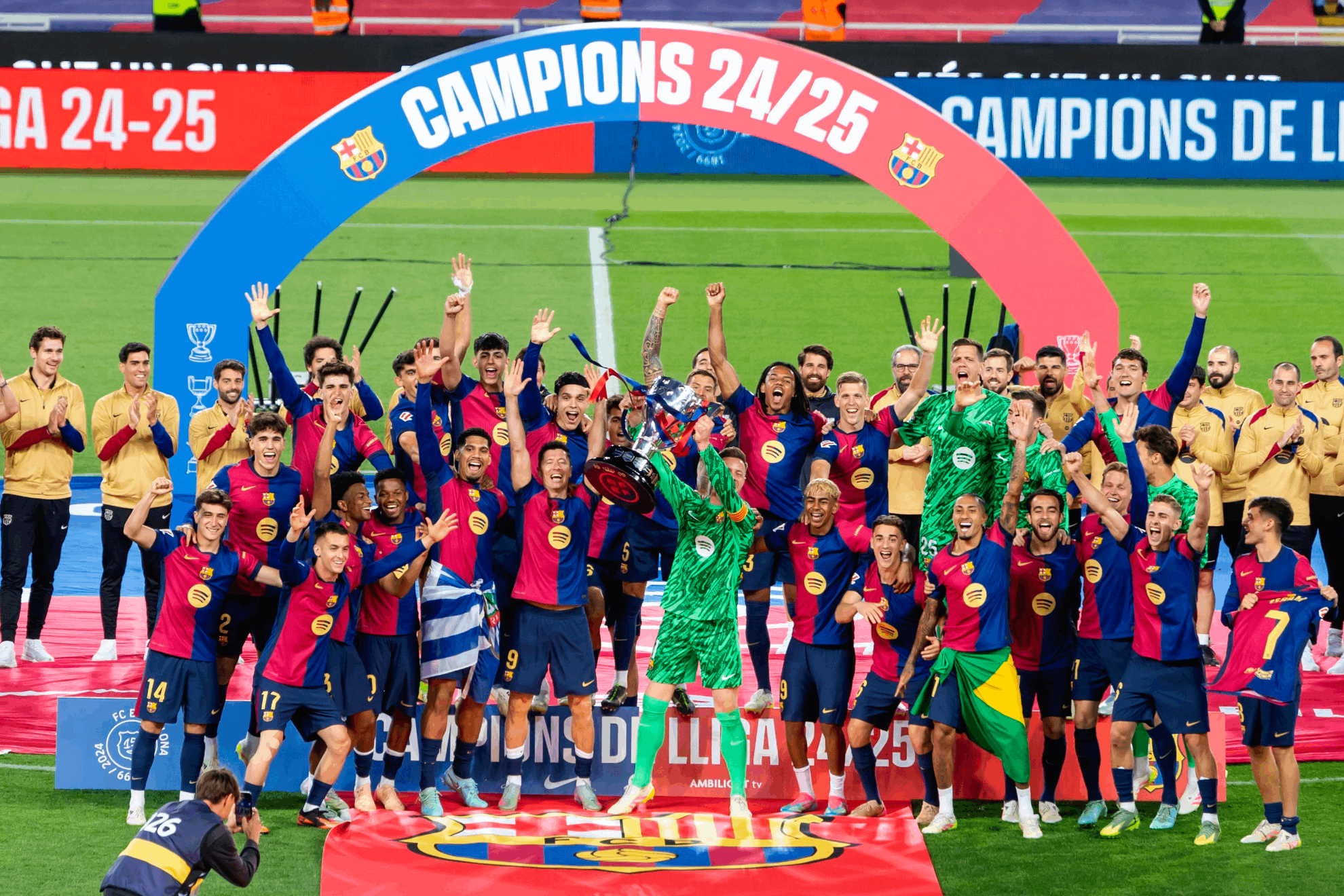
Barcelona's return to Europe's financial elite confirmed in new report, with the club boasting highest operating revenue among champions despite playing at Montjuïc.
Barcelona’s financial resurrection is complete as they reclaim their seat at European football’s top table, with operating revenues touching €1 billion despite still being exiled from their spiritual home.
Money talks
The latest European Champions Report 2026 has confirmed what many suspected - Barça are once again playing in the financial Champions League. The Catalan giants recorded the highest operating revenue (€985m) of any European champion last season, sitting second only to their eternal rivals Real Madrid when all clubs are considered.
This represents a proper Bobby Dazzler of a comeback after years of financial shenanigans, dodgy levers and belt-tightening that would make your eyes water. Their 29% year-on-year revenue growth is particularly impressive given they’re still playing at Montjuïc rather than their proper gaff.
The club’s commercial income has skyrocketed (+44%), while matchday revenue has climbed despite the temporary stadium situation. Just imagine the numbers once the renovated Spotify Camp Nou fully reopens - that’s the golden ticket.
Efficiency kings
What’s particularly impressive is how Barcelona have managed their wage bill, bringing their personnel cost ratio down to 52% - exactly matching Bayern Munich and only bettered by PSV among champions. This puts them firmly in the UEFA-approved zone for financial efficiency.
The club still recorded a small loss (-€17m), but experts reckon this is largely down to legacy costs rather than current mismanagement. The trend points clearly toward stabilization.
La Masia: The ultimate financial weapon
Barcelona’s secret sauce remains their youth academy. No other European champion can match their combination of youth and homegrown talent - a setup that simultaneously reduces costs and multiplies player value.
Case in point: Lamine Yamal is now valued as the world’s most valuable player at €290 million according to Football Benchmark. Not too shabby for a teenager who cost the club precisely nothing in transfer fees.
The champion divide
The report highlights the massive financial gulf between Europe’s champions:
- Top tier: Bayern, PSG, Liverpool and Barcelona (all €830m+ revenue)
- Second tier: Galatasaray (€282m)
- Third tier: Napoli (€179m), PSV (€171m), Sporting (€148m)
For clubs like Sporting, Champions League participation represented a 46% revenue boost, while Napoli’s income plummeted 30% without European football. Winning domestically is nice, but it’s European competition that pays the bills for smaller league champions.
Different paths to success
The report shows contrasting approaches to financial management. PSG still lead the world in wage expenditure (€547m) despite an 18% reduction after Mbappé’s departure. Meanwhile, Bayern Munich represent the model of efficiency - 33 consecutive years of profits, €27m in the black last season, and €285m accumulated profit over a decade.
Barcelona’s return to Europe’s financial elite marks a significant milestone in their recovery. However, the report also serves as a reminder of the massive economic disparity in Spanish football, with La Liga increasingly dependent on its two giants.