

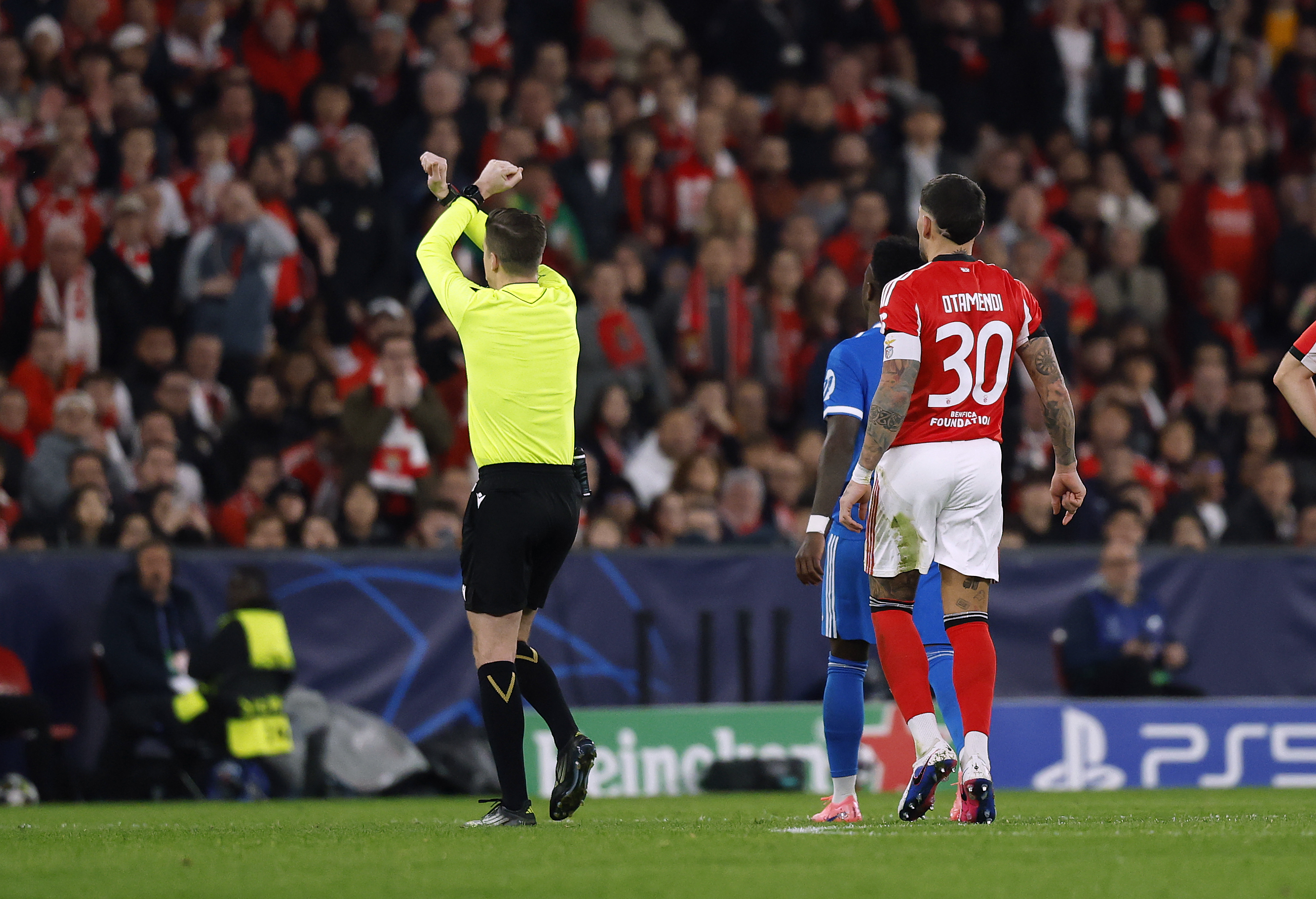
The Anti-Racism Hand Signal That Stopped Play at Benfica vs Real Madrid
How a simple hand gesture became football's universal anti-racism symbol, and why it was deployed during Real Madrid's Champions League clash with Benfica.
FIFA’s anti-racism protocol was activated during Real Madrid’s Champions League clash with Benfica after Vinicius Jr reported alleged racist abuse from Benfica’s Prestianni.
The Incident at Estádio da Luz
The moment occurred shortly after Vinicius had put Madrid ahead with a brilliant goal. During his celebration, the Brazilian star crossed paths with Benfica’s Prestianni, who allegedly directed racist comments toward him.
Vinicius immediately reported the incident to French referee François Letexier, who responded by making the now-standardised anti-racism gesture – crossing his arms at the wrists while pointing to the “No to racism” badge on his sleeve.
This action triggered the first level of FIFA’s three-tiered response protocol, allowing the match to resume after a brief pause.
The Story Behind the Gesture
This universal hand signal against racism has a surprisingly recent origin. It was:
- Unanimously approved at the 74th FIFA Congress in Bangkok
- First implemented at the Women’s U-20 World Cup in Colombia in late summer 2024
- Designed to be highly visible across the entire pitch
- Created so players themselves could signal to officials when experiencing racist abuse
FIFA deliberately chose a highly visual gesture that could be immediately recognised throughout the stadium, sending an automatic message to spectators and players alike.
Not Madrid’s First Encounter
This wasn’t Real Madrid’s first experience with the protocol. A similar incident occurred during a Club World Cup match against Pachuca, when Brazilian referee Ramon Abatti activated the protocol following alleged racist comments from Cabral directed at Madrid defender Antonio Rüdiger.
The implementation of this protocol represents football’s growing commitment to providing clear mechanisms for addressing racism during matches, rather than leaving players without immediate recourse.